
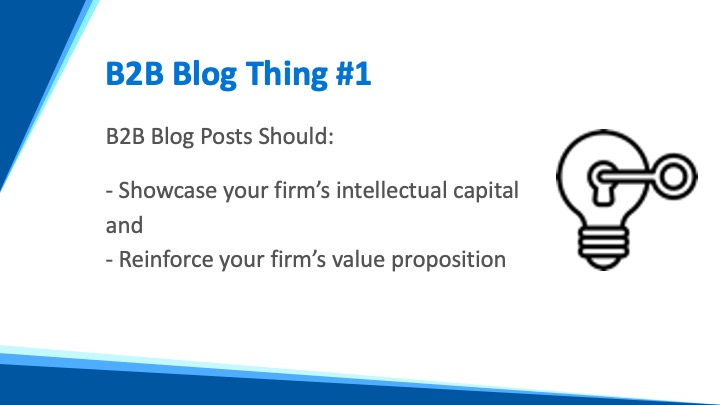
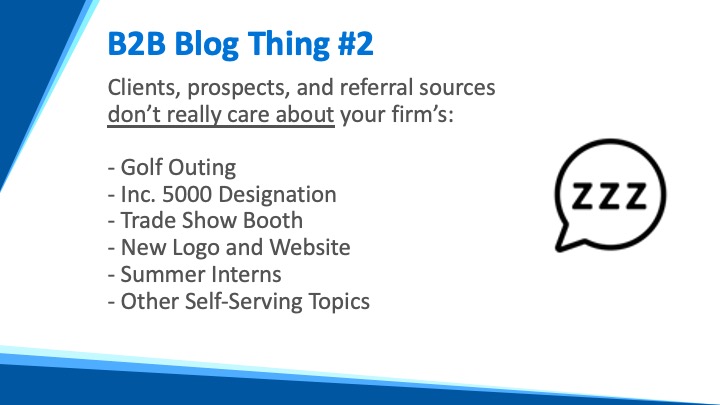
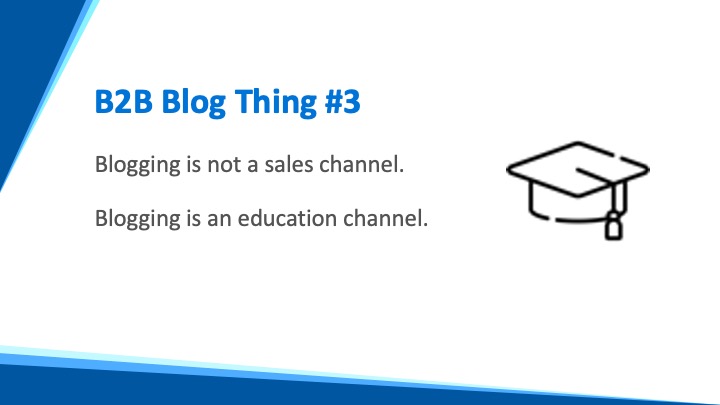
Many B2B blogs lack strategic focus; wasting time, money, and opportunities to engage with target audiences. Is it time to rethink your blog?
Category Archives: Uncategorized
Why Content Marketing Will Continue to Fail in the Age of Artificial Intelligence (A.I.)

In the mid 1980s, with introduction of the Mac computer, PageMaker software, and the LaserWriter printer, the DeskTop Publishing system was born; for the first time allowing anyone to create print and online marketing materials that did not require a bona fide graphic designer or any elaborate printing hardware to produce physical documents.
This was a major technological advancement in the world of marketing communications. It also marked the beginning of a (ongoing) period that has produced some of the most incomprehensible, unattractive, and brand-damaging print and online marketing materials in the history of the communications.
DeskTop Publishing did not make people with no design talent or writing skills into graphic designers or copywriters. And based on the way content has been created and applied by most firms over the past decade, the availability of Artificial Intelligence will not make people more effective content marketers.
Here’s why:
- Most firms still don’t understand that marketing content is NOT about sales.
Blog posts or press releases extolling the features and benefits of your firm’s whiz-bang new product or service are more likely to be read by competitors than by prospects. White papers lost their credibility many years ago, because so many companies turned them into self-promotional sales brochures.
Your target audiences want objective, relevant, helpful information that addresses their challenges and opportunities, and enables them to draw their own conclusions regarding your firm’s ability to assist them.
- Most firms still don’t know how to extract or showcase their own intellectual capital.
Using ChatGPT to create a 500-word blog post may provide your company with the appearance of thought leadership, and remove some or all of the burden of drafting your own content. But AI-generated content will never be able to craft marketing content that’s based on your company’s unique experiences and perspectives that support its value proposition…which is what your clients, prospects and referral sources really want to know about.
- Most firms still create content that their target audiences don’t care about.
Your company understandably wants to demonstrate its investment in employees, or its commitment to charitable and civic causes. But in an online world where you have nanoseconds to catch market interest, content describing your company’s mud run, golf tournament, or wishing people a Happy Cat Lovers Day, is an enormous opportunity loss in terms of audience attention.
Find another platform for your internal news, and focus exclusively on addressing the “What’s In This For Me?” question that the outside world applies to all content.
Technology tools – whether it’s DeskTop Publishing or Artificial Intelligence – will never replace human (or corporate) experience, insights, talent, or creativity. Those tools are only of value in content marketing if you know how and when to apply them. The marketing profession’s track record suggest that more time should be devoted to strategy than to tactics.
Filed under Uncategorized
Three Law Firm Marketing Shortcomings…and How to Avoid Them

The generation of attorneys who still consider any type of “marketing” to be unprofessional is diminishing, concurrent with the increase of “Emeritus” partners listed on law firm websites. That evolution notwithstanding, most law firms and younger practitioners remain stuck in neutral, in terms of marketing sophistication.
Hard-wired to follow apparent industry “best practices” (mostly based on mimicking competitors), law firms of all sizes continue to miss opportunities to increase clients and revenue. But pathways for improvement are available. Adoption of a few simple marketing principles applied by successful professional services firms in other disciplines – including financial services, accounting, architecture, engineering, and management consulting – can drive consistent engagement with existing and new clients for any law firm or practitioner.
Here are three ways that law firms are missing opportunities to accomplish that goal:
Shortcoming #1: Over-Reliance on the Influence of Law Firm and Attorney Rankings
The proliferation of legal rankings combined with greater understanding of the economic self-interests of ranking providers has eroded the legitimacy of their “Super” and “Best” attorney and firm rankings, and greatly reduced the impact of rankings as a selection factor. Because these (largely “pay-to-play”) recognitions do not allow prospective clients to draw first-hand conclusions regarding a practitioner’s or firm’s ability to address their needs, they are a relatively weak and lazy marketing tactic.
Law firms and attorneys would be better served by not playing the rankings game, and investing whatever time and attention is required to create substantive content that showcases their intellectual capital in their areas of expertise, and by having that content published under their byline in respected business or industry publications. This earned media exposure generates an inherent 3rd party endorsement from an objective, credible source. In turn, these “credibility tools,” require no leap of faith regarding the practitioner’s or firm’s potential to add value. Prospective clients can judge that for themselves.
Shortcoming #2: Failure to Drive (Relevant) Top-of-Mind Awareness Among Target Audiences
Like other service-related businesses, law firms have no insight into when a client or prospect will require their services. So most law firm marketing plans are based on putting several lines in the water, and hoping something takes the bait. Practitioners and firms invest in online directories, on search engine optimization or paid search, on Google ads and even highway billboards to drive new business inquiries. At the same time, they often fail to leverage the strength of their most powerful marketing asset; by not communicating – effectively, consistently, or at all – with their established database of clients, prospects, and referral sources; ideally on a quarterly basis.
But driving top-of-mind awareness in an effective manner among established contacts does NOT mean sending them a laundry list of items about your firm’s recent wins, about its new class of summer interns, or about its charitable golf outing. Those largely self-promotional items are more appropriately communicated on social media. Direct communication is an opportunity, and an obligation, to demonstrate thought leadership and subject matter expertise (perhaps with a recap of your recently published bylined article?), and to address the most important question on the minds of all your recipients: “What’s in this for ME?”
Shortcoming #3: Not Managing the Sales Cycle by Hijacking the Buyer’s Journey
Some law firms are unwilling to directly solicit prospective clients, either for fear of appearing desperate for business, or being accused of acting unprofessionally in attempting to displace a prospect’s current law firm. But if your firm accepts the notion that business development is a game played with a hardball rather than a softball, there are effective ways to shorten the sales cycle without compromising the written and unwritten rules of law firm marketing. Notably, this involves hijacking the Buyer’s Journey.

What does that mean?
By approaching high-value, targeted prospects with well-crafted, tailored solicitations that describe a solution to a specific problem or opportunity, a law firm can:
– Demonstrate its value proposition (Create the “Awareness” Stage)
– Gain competitive advantage (Eliminate the “Decision” Stage)
– Immediately engage with prospects on a substantive basis (Initiate the “Consideration” Stage)
– Avoid competition and responding to RFPs and RFIs, and
– Earn a position on the prospect’s “short list” for future assignments
For decades, successful professional services firms have applied these same strategic marketing principles to drive consistent client and revenue growth. There’s no reason why law firms can’t benefit from these practices as well.
Filed under Marketing Strategy, Uncategorized
Branded Interviews: Your Pathway to “Enlightened” Thought Leadership

Traditional thought leadership – whether it’s delivered through owned media or earned media – most often involves showcasing your own ideas and opinions, those of a client, or of an individual within your organization.
From a content marketing perspective, the shortcomings of traditional thought leadership include:
- the high noise factor, caused by market competition for attention
- the perception that thought leadership is mostly self-promotional
- the sad truth that few “thought leaders” have anything interesting to say
- the challenge of producing new or interesting insights on a consistent basis, and
- the reality that your target audiences are unlikely to read your long-form commentary.
The Alternative to Traditional Thought Leadership
The underlying assumption of “Enlightened” thought leadership is that managing the conversation (on any topic) by showcasing respected, credible 3rd parties is far more effective than promoting your own, your client’s, or your company’s opinions and insights.
In other words, you must put ego aside, and acknowledge that your “internal” intellectual capital can be worth less than credible outside voices that you deem to be worth hearing, and whose message supports and validates your company’s value proposition.
This somewhat contrarian approach to thought leadership…delivered in an editorial format that we call Branded Interviews…is the most effective way for B2B companies of all types to build brand stature, and to connect the dots between marketing and sales. Hands down.
In a nutshell, Branded Interviews are:
- Interviews with recognized, respected opinion leaders with credentials related to your industry or professional discipline. They should not feature employees or clients
- Presented in a quick-reading Q&A editorial format, with 10 – 12 questions that highlight the individual’s personal and professional background, insights, and opinions
- Purely objective in nature. Guest comments should not mention or promote your business in any way
- Published on a quarterly or bi-monthly basis; distributed to clients, prospects and referrals sources; and promoted on LinkedIn…ensuring top-of-mind awareness with target audiences
- Valuable due diligence assets for your sales team to use with prospects
- Inherent 3rd party endorsements that should be archived in a dedicated section on your website
In truth, Branded Interviews require considerably more time and effort than traditional thought leadership content, even compared with what’s involved in generating bylined articles in respected business publications. The strategic selection and solicitation of guests, the development of relevant questions, the interview logistics, the conversion of an interview transcript to concise written responses, and the approval process, all take time and finesse. But the end-product is well worth all that work; producing evergreen content with unmatched credibility, and countless marketing and sales applications.
It’s Not About the Content. It’s About the Relationships.
Perhaps the most compelling reason to convert to enlightened thought leadership is that the publication development process itself has tangible value, in terms of establishing and building relationships with influential individuals who can make things happen for your company.
For one of our clients – an emerging healthcare technology company – their Branded Interview led to a relationship between the firm’s CEO and the interview guest that resulted in acquisition of the company at a significant multiple, which was the CEO’s intended exit strategy.
Asking a recognized opinion leader (that your firm may have no connections with) to be profiled in your Branded Interview may seem like a long shot, as well as a formula for embarrassment if the opinion leader declines. But the invitation process serves to put your company on his / her radar screen, and is flattering to the individual, whether or not they accept. Very often, high profile individuals do accept invitations to be interviewed simply because, like most people, they enjoy telling their story, and sharing their ideas.
In our view, Branded Interviews are an important and cost-effective way for B2B companies to get noticed and build brand stature, and should be a core tactical component in an integrated marketing strategy.
Before initiating a Branded Interview program, however, there are two important caveats:
- This is not a short-term marketing tactic designed to produce an immediate market response. It’s a sophisticated, longer-term approach that will yield tangible marketing and sales benefits over time.
- Lacking a senior management commitment to produce at least four Branded Interviews over the course of a year, B2B firms should pass on this marketing tactic.
Give me a call if you’d like to learn more reasons why we’re such big fans of Branded Interviews.
Filed under Uncategorized
4 Media Relations Lessons…Learned the Hard Way

Media relations (or press relations) involves risks and consequences that can quickly derail any career, either as a corporate executive or PR agency rep. A misquote can sink a company’s stock price. An innocent “puff piece” can turn out to be an exposé that embarrasses your CEO. An insensitive comment on camera can spark a customer boycott.
Over the course of my career – as an in-house staff member, and as a PR flack for hire – I’ve received several permanent scars, while attempting to generate positive coverage, and while defending against negative reporting. Some of those media scars have been self-inflicted; others were caused by journalists who often play by their own set of rules.
Here are four lessons I’ve learned from working with the press:
1. A Reporter Can Never Be a Trusted Friend.
As spokesperson for the Options Division of the American Stock Exchange, I frequently spoke with a Chicago Sun-Times reporter who covered news related to the Chicago Board Options Exchange. At that time, the CBOE had a significantly greater number of options listings compared with the Amex, but a small number of listings were traded on both exchanges. He considered the competition for market share involving those few listings to be newsworthy.
Our weekly conversations were always friendly. Discussion topics ranged from baseball to poetry, and always ended with him asking me for a comment about market share, with me declining. After several months of weekly conversations, and having exchanged college exploits and family details, I considered this reporter a friend. Tired of declining to comment on his market share issue so many times, I finally said to him one day, “Why do you keep asking me that same dumb question? The CBOE is so much larger than the Amex, and the CBOE only trades options, so why is that a story?” He laughed and we hung up.
The next day, I was summoned to the Amex President’s office. He threw a copy of the Chicago Sun-Times in my lap. The headline of the business section read: AMEX OFFICIAL ADMITS CBOE SUPERIORITY. I expected to be fired on the spot, but instead (and to my great relief) he told me, “Don’t ever let that happen again.” I’ve never forgotten the lesson to always expect to see whatever you say (and sometimes things you didn’t say) in print. Nor have I forgotten my boss’s benevolence.
2. Some Reporters Have Personal Agendas
While representing a major chain of food stores as outside PR counsel, I brought in a Forbes reporter in hopes of having her write a company profile. The food chain had been doing very well, had an interesting story, and there was no negative news associated with the company. The reporter’s 2-hour interview with the CEO went very well. He answered all of her questions in a direct manner, and she did not present any questions that suggested an intention to write anything other than a positive story. The CEO winked at me on the way out the door, as if to say, “Nice job.”
Two weeks later, I picked up the phone, and the CEO screamed, “Have you seen the article in Forbes?” I said no, and he yelled, “When you read it, you’ll know why you’re fired!” He slammed down the phone.
I scrambled to get a copy of Forbes, and read what was a total hatchet job. The reporter had nothing positive to say about my client’s company. My fingers trembled with anger as I dialed the reporter. She picked up, and I asked her, “How could you possible write that story?” There was a long pause, then she said, “I didn’t like the way your client treated his secretary.” Then she hung up. That experience taught me that you can never count on positive coverage. Press relations is always a crap shoot.
3. Admit When You Don’t Know the Answer
As head of public relations at a very large financial services company, I spoke on a regular basis with seasoned journalists who always knew far more than I did about complex, arcane topics. I received a call one day from a Wall Street Journal reporter regarding a press release we had just issued involving a stock split. He asked me a question that I didn’t really understand, but my ego did not allow me to admit to him that I didn’t know the correct answer. His question was simple, requiring me to select one of two possible responses. Playing the odds, I picked one, hoping it was correct.
The next morning, in a flashback from my Amex days, the firm’s CEO walked into my office with a copy of the Wall Street Journal, asking who had spoken with the reporter who covered the stock split. I had picked the wrong response to the reporter’s question, and the error had been published. For a second time, I was lucky to keep my job, but groveled in the follow-up call to the reporter, asking for a clarification in the next issue. I’ve never made that same mistake, and now consider admission of ignorance a badge of courage.
4. A Reporter’s Ego Can Derail Fair Coverage
While representing a new advertising agency, I arranged an interview for the agency co-founders with a well-known New York Times columnist who covered their industry. My clients were elated at the prospect of being featured in such a respected, widely read column. But when the story appeared, some of the key facts regarding the agency were reported incorrectly.
I assured my clients that the columnist would print a clarification in his next column. I called him, and introduced myself, to which he responded, “I know why you’re calling me. And if you push for a clarification, I will never cover your client in my column again.” Offsetting this unpleasant incident, I’ve also had experiences with well-known journalists, including Dan Rather, who’ve kept their positions and egos from affecting their professionalism.
In media relations you learn to expect surprises, and to roll with the punches. Career risk notwithstanding, you have the potential to educate target audiences, to shape opinion, and to create positive outcomes for your company or client. When those good things happen, the hard lessons you’ve learned and the scars you accumulated all seem worthwhile.
Filed under Uncategorized
How To Make Marketing An Invaluable Function

In its landmark 2018 Pulse Survey of 220 Chief Marketing Officers, the executive recruiting firm Korn Ferry reported that, although financial results were the most important factor in their performance-based compensation, “52% of CMOs say they cannot make a direct and obvious correlation between marketing efforts and company performance.”
At small and mid-sized businesses, the heads of marketing rarely receive performance-based compensation related to financial results or related to any quantitative metrics directly associated with company performance. Their compensation and tenure are often based on fuzzy or subjective factors, including the ability to generate earned media, maintain an effective website, produce relevant content for social media or score highly in brand awareness or customer satisfaction surveys.
By design or default, most marketers are so far removed from the revenue-generation function that they cannot claim to add value to it. Or they find it impossible to demonstrate any role they play in achieving goals that are important to their CEO. In my experience, the sales team typically forgets to ask prospects how they’ve learned about the company or product. And when asked directly, prospects often claim that they can’t recall. Neither of those endorsements, however, would provide strong validation for marketing’s return on investment.
Regardless of company size, the marketing function will increasingly be at risk during tough economic periods, and will never have a permanent seat at the management table, unless CMOs and marketing VPs redefine their role and establish tangible ways to associate their efforts with revenue generation. To survive and grow in their current position, they need to invest more time on tasks that will affect the company’s top-line revenue and less time on what amounts to window dressing.
The Holy Grail of Sales and Marketing Alignment
Marketing and sales alignment must be the highest strategic goal for every marketer. This is no easy task.
Because sales reps have a more direct line of measuring revenue generation, it falls on the CMO’s shoulders to fix the sales-and-marketing culture clash — that is, where sales reps don’t believe in marketing’s ability to hand them worthy leads, and where marketers don’t believe that sales reps know how to properly manage those leads. In this culture clash, there is far less incentive for the VP of Sales to affect that change.
Here’s how marketing leaders can begin to establish a new way of working together with the sales team, and in the process, improve their company’s performance, as well as their professional stature and job tenure:
• Make yourself part of the sales team. Depending on the amount of rancor that currently exists between sales and marketing, it may require some triage or finesse to tell your sales counterpart that you’d like to better understand their world. Do not explain that you are on a mission to “align sales and marketing,” which might be met with suspicion. Instead, simply ask for guidance on ways you can improve communication and practical assistance. Suggest that combined marketing/sales meetings be held on a monthly or quarterly basis.
• Gain a firsthand understanding of the sales process. This requires shadowing on sales calls, which may not be met with enthusiasm by the head of sales or by individual sales reps. If marketing can gain a sense of what actually occurs on sales calls — ranging from how the product or service is described, to the prospects’ questions and objections — it will be in a much better position to craft tools and tactics that are based on market realities, rather than sales reports. Or it may result in a mutual agreement regarding the definition of a qualified lead.
• Gain a firsthand understanding of customer needs and issues. With or without the help of the sales department, find ways to stay on top of customer sentiment. Go deeper than automated online surveys. For example, spend a half-day every month listening in on calls that come into your customer service center. Better yet, reach out to current and former customers by phone (with the approval of sales) to gain an appreciation of why they are customers or why they’ve left.
• Build trust and partnership in small, meaningful ways. The degree of mutual cooperation between marketing and sales depends largely on the personalities involved, and how well they like and respect each other. That relationship can be strengthened over time if marketing finds ways to be helpful without encroaching too far onto sacred sales territory. This can include everything from their pitch letters and PowerPoint presentations to case studies and demos. The initial task is to discover the “safety zones,” where sales will welcome assistance from marketing.
• Ask for feedback and find ways to compromise. Ed Koch, the legendary mayor of New York City, was known for always asking his constituents, “How am I doing?” What made Koch a great mayor was that he listened to their responses and found ways to address positive and negative feedback. Marketing and sales will always view the world through a different lens, so simply acknowledging that you don’t have all the answers is a necessary starting point for effective teamwork.
There are countless books, articles, research studies, educational seminars and consulting firms devoted to sales and marketing alignment. My guidance is neither unique nor comprehensive. For CMOs and marketers who spend their days creating content that no one reads, and generating campaigns that fail to create customers, I’m simply suggesting they should keep their resumes up to date.
This article was originally published in Forbes: https://www.forbes.com/sites/forbesagencycouncil/2021/01/08/how-to-make-marketing-an-invaluable-function/?sh=4846c08874f5
Filed under Uncategorized
Diet, Exercise And Marketing: Self-Imposed Obstacles That Ensure Failure

There are practical reasons diet companies and national gym chains spend most of their advertising budgets within two seasonal windows: in advance of the new year, when people make their annual resolutions, and in springtime, when beachgoers face the prospect of wearing a bathing suit in public.
Despite best intentions, many people who join gyms in January are likely to drop out in February, and many other new members will drop out within the next few months. Countless research studies also suggest that many people who lose weight will regain all of those pounds within a year, and likely add more.
There are valid social and physiological reasons most people don’t do the things necessary to maintain their personal health and fitness. On their journeys, they also must overcome self-imposed obstacles, and in my opinion, three of those are the same reasons marketing fails at most companies.
1. Setting Unrealistic Expectations
Regardless of our body shape, age and metabolism, we typically seek chiseled six-pack abs and movie-star good looks. In marketing as well, we often establish lofty goals — whether they involve lead generation, revenue growth or new accounts — that require a level of investment or period of time that far exceeds actual resources. Having “stretch goals” can be a healthy practice, but at too many companies, consistently falling short of unrealistic targets often results in shelving the marketing initiative altogether.
If there is no benchmark data from prior campaigns, companies are more likely to succeed if they begin with very low (or even zero) performance expectations. Whatever outcomes are achieved over the course of the campaign are then closely and consistently examined to determine what’s working and what’s not in order to make necessary adjustments. That way, there’s a much greater likelihood that the campaign will yield increasingly better results over time.
2. Searching For A Magic Bullet
Fad diets and weight-loss supplements can provide temporary solutions for people seeking alternatives that are faster and easier than changing their eating habits or exercising on a regular basis. Similarly, some companies are always seeking a marketing tactic or gimmick in hopes of generating immediate results.
Two current examples of perceived magic bullets include content marketing and marketing automation software. In both cases, companies can mistakenly believe that producing and sharing content, or consistently emailing information to prospects, is a guaranteed fast track to higher market response and business growth. But those two tactics will never deliver meaningful outcomes unless the company produces content that’s of interest to target audiences, and unless it defines and monitors the metrics it wants its marketing automation to achieve. Neither of those initiatives are quick fixes.
3. Lacking A Meaningful Plan
“Lose weight” is not a plan. Instead, a plan might be: “Lose 10 pounds over the next three months by monitoring my caloric intake; running two to three miles on Monday, Wednesday and Saturday; and logging my weight every morning.”
Each time I’ve met with a prospective client over the past three decades, one of the first questions I ask is, “Do you have a written marketing plan?” Some are truthful and tell me no. Others tell me they have a plan, but that it’s not written; to which my response is always, “Then you don’t really have a marketing plan.”
Some companies do have a written marketing plan. Typically, it’s contained in a three-ring binder that never gets looked at — and those companies don’t have a real marketing plan either. As a result, all of those companies have no tangible way to plan, budget for or execute meaningful marketing activity. There is no way to calculate the return on their marketing investment. There is no real accountability — no connection with the company’s sales function or with business metrics that can have an impact on its balance sheet.
Marketing’s Place At The Management Table
Too often, marketing is marginalized as a way to “promote the brand” or to “build goodwill,” and is viewed as overhead rather than a profit center. But for company owners or senior managers who are serious about tapping into the enormous potential of marketing to grow their enterprise, there is a pathway to avoid the three most common self-imposed obstacles:
• Treat marketing as an essential corporate discipline that requires the same level of commitment and long-term perspective as operations, sales, legal, accounting, technology or HR functions. Marketing should not be ignored or reduced when business is good, nor should it be applied only as triage when business declines. Marketing needs to run at a consistent pace at all times.
• Accept that there is no “secret sauce” in marketing that will transform the company overnight. The most meaningful marketing initiatives will take planning, hard work, and ongoing scrutiny and modification to produce results.
• Create written marketing plans that are realistic and user-friendly. They need not be lengthy or complex, and can be as brief as a two- to three-page memo. Your programs should be based on actionable, measurable tactics that are focused on driving market engagement rather than opinion, and that are not sacrosanct. If they’re not working, they’re fixed or replaced.
Management consulting legend Peter Drucker said, “Because the purpose of business is to create a customer, the business enterprise has two — and only two — basic functions: marketing and innovation. Marketing and innovation produce results; all the rest are costs.”
Given the actual role that marketing currently plays at most companies, Drucker — who passed away in 2005 — would likely need to modify his bold statement: “Marketing and innovation can produce results; all the rest are costs.”
Marketing’s full potential will be realized only by those companies with the insight to give the function a seat at the management table and the determination to make marketing earn its place there.
Filed under Uncategorized
Social Distancing: Marketing’s New Strategic Mandate
 Long before the fear of contracting COVID-19 entered our collective consciousness, and thanks to modern society’s reliance on electronic devices, many people were already practicing a form of social distancing. Without leaving our own homes, we text or play video games with friends. Many of us no longer call family members as often.
I believe that the COVID-19 pandemic has simply accelerated social distancing, and that it will normalize self-imposed isolation long after it’s over. We may all be in this together, but social distancing has also changed the meaning of what “together” really means. This will likely have a lasting impact on our global society, on how people communicate with each other and on how marketers will reach and influence people in the future.
If these predictions are correct, and people continue to reduce their interpersonal contact, here are some tactical suggestions involving three major categories of marketing activity.
Direct Communication
Many companies have abused email to such a great extent — bombarding clients, prospects and referral sources with email blasts, self-serving newsletters and other useless information — that it’s now extremely difficult to get noticed or gain meaningful traction. But marketers who know how to craft an enticing subject line, and who can write effective copy, can break through the clutter. Include the person’s or company’s name in the subject line to distinguish it from spam, for instance. More importantly, remember that long, rambling messages rarely get read. Less is more, if it’s well written.
I also recommend practicing the art of the physical letter. In terms of visceral impact, I believe there’s still no substitute for ink on letterhead that’s hand-signed and delivered in an envelope featuring an attractive commemorative stamp. Snail mail, which for decades was blocked by executive gatekeepers, is now such a rare occurrence that personal letters often receive immediate attention. I’ve found that letters also make it far more likely that the recipient will remember the communication and take a follow-up phone call from the sender.
Online Visibility
With the exception of sophisticated e-commerce businesses, I’ve noticed that most companies maintain a “brochureware” website that’s rarely refreshed. Many have blogs featuring content that most visitors neither read nor comment on. Very few companies seem to monitor website analytics, and even fewer understand the complex world of SEO. A significant number of companies also maintain a presence on social media platforms and publish posts for a relatively small group of followers, many of whom are not their target audience.
Although most company CEOs or owners would never consider operating without a website — which serves as the modern-day storefront — many of them over the years have confessed to me that they see no tangible connection between their website or social media and tangible business outcomes, such as lead generation, increased sales or new accounts.
As social distancing drives even greater reliance on information that’s gained through online search, marketers will likely need to establish a much higher bar for themselves in terms of the ROI for the content they produce. Repurposing third-party information with (or without) your firm’s introductory comments, or posting online versions of sales collateral — under the guise of thought leadership — is simply noise.
Earned media has the highest value on the credibility scale. Rather than posting a self-serving white paper, work with a vertical trade or professional publication to produce an objective bylined article on the topic. Then, promote that content, which is far more likely to be read and to deliver higher online visibility and sustained Google search ranking compared to any blog or social media post.
Industry Events
The practical business benefits of participation in large conferences, symposiums and seminars have always been difficult to measure. The sales team rationalizes the significant investment of time and expense for these events by claiming the company “would be conspicuous by its absence,” or that they are a cost-effective way to meet face to face with many of the best clients. The veracity of those claims notwithstanding, the COVID-19 pandemic will likely reduce the attendance levels and ROI of large industry events for at least the next few years.
Marketers have always used targeted, efficient means of reaching and influencing large groups of current and potential customers — most often through webinars and other online forums that leverage technology. With the reduced availability and impact of live industry events, I believe marketers will need to step up their game in terms of how they create, promote, manage and leverage online group forums.
With few exceptions, the standard webinar protocol is to create an agenda that (directly or indirectly) highlights the company’s capabilities, and engage a webinar technology firm for logistics. You then promote the event through blast emails and social media and throw any attendee leads over to the sales team for follow-up. If the process yields any new customers, the event is considered a success.
But as the number of online events greatly increases to compensate for fewer industry events, you’ll need to squeeze much more juice out of this tactic. Squarely address and promote the “What’s in this for me?” factor in your webinar content. Make sure your agenda is 100% educational and devoid of self-serving slide presentations. Allow attendees to draw their own conclusions regarding your company’s value proposition, based solely on the quality of the intellectual capital that’s displayed during the discussion. For many marketers, it may be a major hurdle to persuade senior management to make this cultural change.
If your webinar content is truly educational, then you can repurpose it — perhaps as a bylined article or long-form LinkedIn post — for people who didn’t attend the online event.
Beyond adjusting your tactics, consider how the COVID-19 pandemic will affect personal values. In this new world, I believe authenticity, empathy and courtesy will be key factors in decision making, and they should be reflected in everything the company communicates internally and externally.
Filed under Uncategorized
Are Pitch Letters The Cinderella Of Content Marketing?
 Great content can build brand stature and increase market awareness, but in my experience, neither of those achievements necessarily delivers the type of market engagement that results in new accounts or revenue growth.
Most marketing content is distributed through pull tactics, in which blog posts, social media posts, press releases, etc., expose information indirectly to a large audience. Pull-based content marketing is a shotgun approach. You’re firing at a flock of ducks, hoping you might hit a few.
Many marketing professionals argue that marketing automation technologies enable them to drive engagement by monitoring how specific individuals within their target audiences react to their content. For example, if a few ducks are hit by their initial shotgun blast — perhaps by clicking on a blog post link — the marketer can then identify and attempt to take down those particular ducks with another more targeted round or two.
Marketers also use push content to communicate directly with large groups of individuals. This shotgun tactic pushes out generic content through blast emails, direct (snail) mail and cold calling. That content often lands in spam folders, office trash cans and voicemail.
Trade Your Shotgun For A Rifle
How can you use content in a more strategic manner to turn more ducks into customers?
First, stop using ideas and solutions that might apply to all of the ducks in the flock, and instead leverage ideas and solutions that are likely to apply to specific, high-value ducks. Second, take down those targeted ducks with a rifle, not a shotgun.
Both requirements are addressed by unsolicited pitch letters, which is the only genre of content marketing that delivers tailored content through a personalized solicitation process.
How Unsolicited Pitch Letters Work
Because they require in-depth research, must be well-crafted and cannot be mass produced, very few firms leverage unsolicited pitch letters. They’re the Cinderella of content marketing. But over the past 25 years, unsolicited pitch letters have served as my firm’s only method of generating new business, other than referrals. The tactic has worked very well for several reasons. Notably it:
• Allows us to be selective about the types of companies we would like to have as clients.
• Differentiates my firm from competitors in terms of marketing sophistication.
• Incentivizes prospects to respond to our solicitation because the content applies only to them.
• Often eliminates or avoids any type of competitive shootout or request-for-proposal process altogether.
Unsolicited pitch letters are unlike any other form of content marketing for two reasons: One-size-fits-all content isn’t applied, and ideally, they’re sent directly to the highest-ranking decision maker within the target organization. Most often, that’s the CEO, managing partner or owner of the business.
Here are a few of the logistics involved in using unsolicited pitch letters:
• The process begins with research. The essential ingredient in an effective pitch letter is the time you invest in researching a prospective client. Go far beyond their website, and review all the public-facing information available, as well as the company’s competitive landscape.
• Identify a pain point, opportunity or both. The research goal is to identify a problem or opportunity that’s likely to be of great interest to senior management. It may involve a product or service shortcoming that puts them at a competitive disadvantage or a new idea that can reduce operating costs. Make sure that it’s always related to your own firm’s core capabilities.
• Don’t be afraid to criticize the prospect. As long as your ideas are relevant and presented in a professional manner, most prospects will not object to learning about problems or opportunities. In fact, many will welcome an objective outside opinion, even if you are delivering bad news.
• Grab their attention. If you’re sending a pitch letter by email, use a subject line that will increase the likelihood it will be opened. Use the name of the company, and consider referencing the idea you’re pitching. For example: “Our Review of Smith & Company’s Customer Service Capability.”
• Tease. Don’t pontificate. The end goal of the pitch letter is to engage the prospect in a face-to-face or phone conversation. You want to provide a point of view that suggests to the prospect that you’ve invested time in learning about their company and that you have some specific ideas that may be of interest to them. Make them want to learn more.
• Keep the pitch short. The most effective pitch letters are no longer than five or six sentences, with no large blocks of copy. Do not elaborate on your firm’s credentials. Your pitch is based on the quality of your ideas, not on the work you’ve done for others.
• Don’t bother to follow up. My firm’s experience is that the prospect will either respond to a pitch letter quickly or not at all. Don’t send multiple pitch letters or follow up on the phone. That’s not only a waste of time; it can also sour the prospect on doing business with you in the future.
• Check conditions six or 12 months later. Since you’ve invested the time to research the prospect and draft an effective pitch letter, it’s worthwhile to conduct follow-up research on a target company to see whether any changes related to your letter are evident. If not, it’s acceptable to forward your original pitch to the same targets, asking them to reconsider your offer.
• Hang in there. Similar to any sales tactic, you’re playing a numbers game. But if you conduct proper research and pitch relevant ideas on a consistent basis, your solicitations will likely yield meaningful results.
There are many reasons traditional content marketing approaches make sense: notably to maintain your firm’s reputation as a thought leader. But when it comes to the use of content to drive revenue growth, a sophisticated and disciplined pitch letter program has the potential to far exceed the yield of any other push or pull marketing tactic, particularly for small- and medium-sized companies.
Filed under Uncategorized
Is Your Firm a “Safe Choice” for Prospective Clients?

Prospective clients certainly want to know if you have the experience and skills they need. But before they put you on their short list of candidates for consideration, they first will need some assurance that your company is a “safe choice.” The hard reality is that — regardless of your firm’s ability to add value — decision-makers at every level are unwilling to risk their career or reputation on selection of an outside advisor or firm may fail to meet expectations, or even harm their business.
To make matters worse, prospective clients will decide to include or exclude you from their short list long before they talk with you, or meet you in person. Before reaching out to you or sending an RFP, prospects will determine whether your firm is a “safe choice” based on the same method they use to select a restaurant, a movie or golf course. They’ll form an opinion based on publicly available information they find online.
Unfortunately, simply telling target audiences — in your public-facing marketing assets — that your company is smart, honest, unique, innovative, creative, cutting-edge, trusted, etc. rarely succeeds. Prospects will require both hard and soft evidence to support their decision to include you as a serious candidate.
Most importantly, prospects need to feel confident that when their boss, partner, board of directors or spouse ever has cause to ask, “Why did you hire those guys?” that they will be able to provide a strong, defensible, well-reasoned “CYA” response.
If, as the outdated adage suggests, that “nobody has ever been fired for hiring IBM,” then how do you make the short list of candidates if you’re not IBM, and trying to survive in a world where you’re considered a risk even before you’re given an opportunity to succeed or fail?
Here are some tangible and intangible factors that, on an individual and combined basis, can drive marketplace opinion on whether you or your firm is a “safe choice”:
- Transparency: Is information regarding your firm’s philosophy, products / services, processes and people available and easily accessible? (Acid Test: How much digging is required to gain a basic understanding of your value proposition?)
- Consistency: Is all your information kept up-to-date, and relevant to current market conditions? (Acid Test: What’s the frequency and quality of content generation, as well as the number of direct and indirect “touches” with target audiences?)
- Enthusiasm: Does your firm appear genuinely enthusiastic about its business, and its communication with target audiences? Or does activity seem “cookie-cutter,” and communication appear to be treated as a necessary evil? (Acid Test: How often are innovation, provocative thinking and fun baked into those efforts?)
- Core Values: Are your company’s core values expressed in a compelling manner, to address the need to know what you stand for? More importantly, are those core values demonstrated through its actions? (Acid Test: Are they aspirational and inspirational? Is there tangible evidence that your core values really drive decision-making?)
- Culture: Is there a visible common culture, beyond shared academic credentials or charitable activities? Are there tangible signs that employees are valued, have a unified vision and enjoy working together? (Acid Test: Other than the annual mud run photo, do employees appear to be engaged as a team?)
- Associations: Who and what are the people, organizations, ideas and causes associated with your firm? Are those connections — perhaps reflected thought a Board of Advisors — respected, credible and trustworthy? (Acid Test: Is the firm actively connected with the outside world?)
- External Validation: How is your firm’s value proposition confirmed by objective 3rd parties? Do reliable sources express open support or inherent endorsement? (Acid Test: Do credible media sources or research firms cover the company? Do clients identify themselves by name and company?)
- Thought Leadership: Are efforts made to share / promote your firm’s intellectual capital in a helpful manner that’s not directly self-serving? (Acid Test: Do other opinion leaders reference your firm’s ideas or contributions? Are white papers just poorly disguised sales collateral?)
- Persona: Does your firm appear to be run by interesting human beings, or hide its personality behind an opaque, institutional veneer? (Acid Test: Does the overall impact of public-facing communication project warmth and sincerity, or distance and arrogance?)
Short of claiming a long client list of successful companies that your prospects want to emulate, there’s no magic formula that will increase your firm’s ability to be perceived as a safe choice. But as decision-making regarding selection of outside resources is increasingly based on a Google search, your firm can greatly improve its chances of making the short list by managing its online visibility in a more strategic manner.
Filed under Uncategorized






 Marketing Craftsmanship